Dr. Rory Costello is an Associate Professor in the Department of Politics & Public Administration at the University of Limerick and is a member of the Management Board of the National Election and Democracy Study.
Most observers believe that the dramatic decline in support for Sinn Féin over the past year, and particularly during the first half of 2024, is down to the rise of immigration as an election issue. Does the evidence support this interpretation? And if so, in what way did immigration harm Sinn Féin?
It seems likely that Sinn Féin’s attempt to adopt a centrist line on immigration alienated supporters who were initially drawn to the party because of its nationalism and its anti-establishment credentials, but held right-wing views on issues such as immigration. However, it is also possible that more progressive Sinn Féin voters became disillusioned with the party’s failure to articulate a clear pro-immigration stance. As one commentator put it, the party may have got ‘caught between its populist and progressive wings’ and lost support from both sides.
In this post, I will consider the evidence on this issue using data from two surveys carried out as part of the National Election and Democracy Study (www.neds.ie), run by the Electoral Commission. The following three charts will examine the impact of immigration on Sinn Féin support; examine the nature of this impact; and assess the views of the party among former supporters.
Chart 1: Voters who abandoned Sinn Féin see immigration as a top issue
The first chart uses data from a survey that took place just after the local and European elections (interviews held between 8th and 15th June). It was carried out online by Red C and has a sample size of 3,045. When asked who they would give their first preference to in a general election, 18% of respondents (excluding undecideds) said Sinn Féin. This was well down on the party’s 2020 vote share of 24.5%, and around half of what the party was polling at its peak in 2022.
The chart examines the issue priorities of former Sinn Féin voters (i.e., people who said they voted for the party in 2020, but would not vote for them in a general election now) and compares this with the priorities of current Sinn Féin voters and non-Sinn Féin voters. The bars show the percentage of respondents in each of these groups who saw immigration as the most important issue, and the percentage who saw housing and homelessness as the most important issue. These questions were asked in the context of the local and European elections. While issue priorities may be different in the context of a general election, the figures nonetheless give an indication of what issues motivate former Sinn Féin supporters, and how this compares to current Sinn Féin supporters.
Among former Sinn Féin voters, 33% consider immigration to be the most important issue (and over half see it as one of the top three issues), more than double the number that prioritised housing. These patterns are reversed for current Sinn Féin voters, of whom 23% see housing and homelessness as the top issue, and only 12% cite immigration. This confirms that immigration is a particular priority for voters who deserted Sinn Féin.

Source: NEDS survey, June 2024
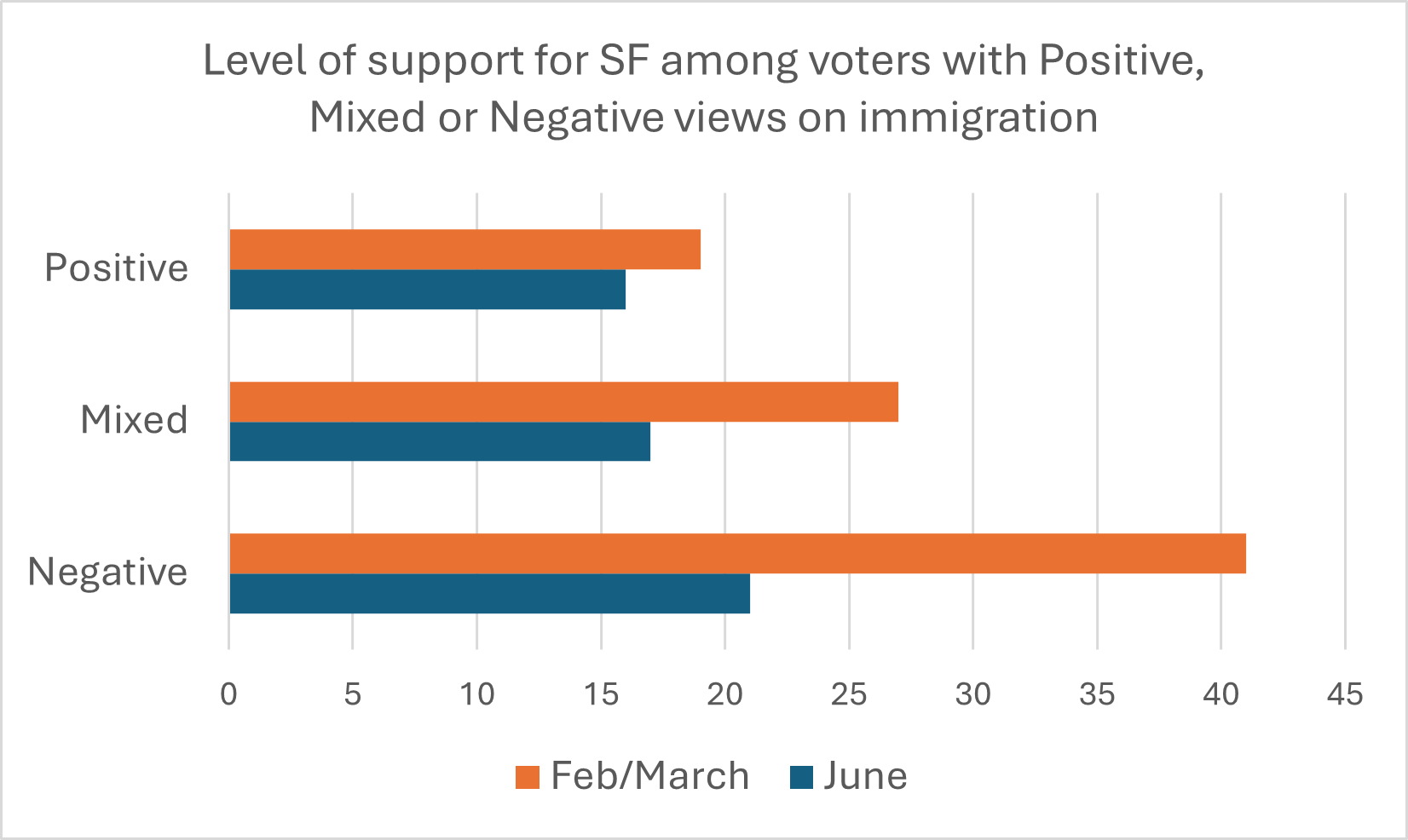
Chart 2: Between March and June, Sinn Féin support fell strongly among anti-immigration voters
To see whether Sinn Féin lost support from both pro- and anti-immigration voters, I compare results from the June survey with an earlier NEDS survey that was conducted at the time of the Family and Care referendums. Like the June survey, this was carried out online by Red C. It has a sample size of 1,041 and fieldwork took place between 16th February and 7th March. At that time, Sinn Féin was still the most popular party in the country; support for the party in this survey stood at 31%.
The February-March and June surveys contain a set of identically worded questions measuring attitudes on immigration and asylum. The chart below divides respondents into three categories based on their responses to these questions: positive views on immigration; mixed views; and negative views. Attitudes on immigration were very similar in the two surveys. In March, 12% expressed positive views on immigration; 56% had mixed views; and 33% had negative views. By June, the corresponding figures were 13% positive; 54% mixed; 33% negative.
While attitudes on immigration did not change overall, the voting intentions of people opposed to immigration changed dramatically over this short period. The graph shows a huge fall in support for Sinn Féin among those with negative views on immigration – from 41% in February/March to 21% in June. There was a smaller but still substantial drop in support for the party among those with mixed views on immigration (down from 27% to 17%); while there was relatively little change in the level of support for Sinn Féin among those with positive views on immigration (a drop from 19% to 16%). In other words, Sinn Féin did not lose support equally from its left and right wings; it was predominantly those with negative views on immigration who turned against the party.
Source: NEDS surveys, March and June 2024.
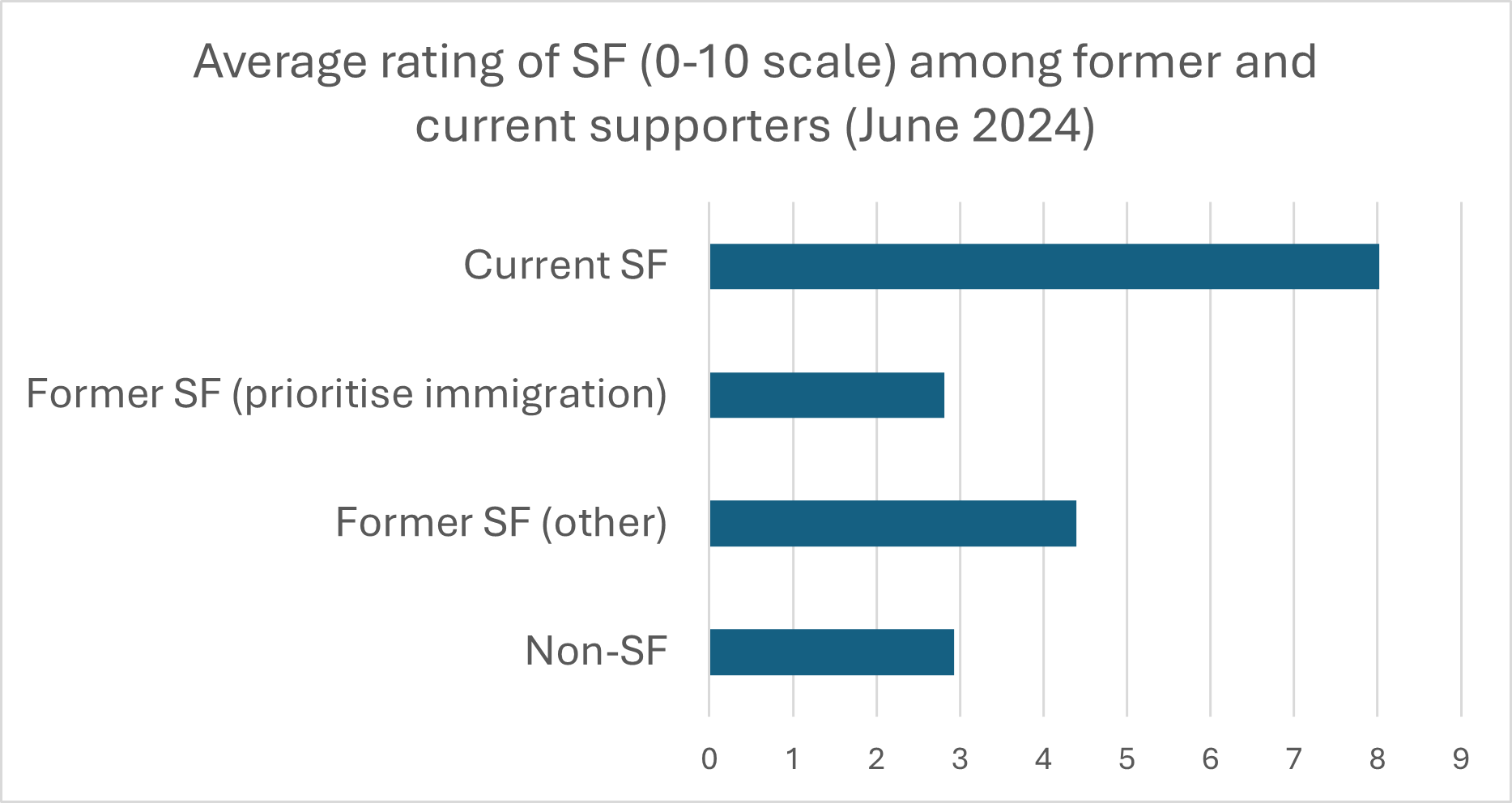
Chart 3: Many former Sinn Féin voters now strongly dislike the party
The final chart concerns the question of whether or not Sinn Féin can win back the voters it lost over the immigration issue. Respondents in the June survey were asked what they thought about each of the parties, on a scale from 0 (strongly dislike) to 10 (strongly like). Not surprisingly, current Sinn Féin supporters have on average a very positive view of the party, scoring it 8/10 on average. In contrast, former Sinn Féin voters for whom immigration is the number one issue have a very negative view of the party, rating it less than 3/10 on average, which is similar to the rating given by non-Sinn Féin voters. Former Sinn Féin voters who did not list immigration as the number one issue were a bit less negative about the party (rating it at just over 4/10 on average). This suggests that if Sinn Féin is going to win back some of the support that it lost, it is unlikely that it will be among voters who left the party over the issue of immigration.
Source: NEDS survey, June 2024
Implications
At it’s peak, Sinn Féin was drawing support from voters on all sides of the political spectrum who were dissatisfied with the government parties. It was always going to be difficult for a party with a left-wing policy agenda to retain such a diverse coalition of voters. It was generally assumed that Sinn Féin would lose the right-leaning anti-establishment vote once it entered government; this has instead happened with the party still in opposition. Those who have stayed with the party tend to be more left-wing: in March, 38% of Sinn Féin supporters considered themselves left-wing; by June, this had risen to 45%. While obviously bad for the party’s electoral prospects, shedding these right-wing supporters does represent something of a correction: Sinn Féin’s current support base is smaller, but more coherent, and more in tune with the party’s left-wing principles.
 Irish Politics Forum