Does Brexit demand non-binary decision-making?
Guest post by Peter Emerson, director of the de Borda Institute in Belfast. Problems which are not binary cannot best be resolved with binary votes.
Guest post by Peter Emerson, director of the de Borda Institute in Belfast. Problems which are not binary cannot best be resolved with binary votes.

Guest post by Dan Haverty, intern with the Atlantic Council’s Millennium Leadership Programme and graduate of UCC’s MA in International Relations. The intensification of the Brexit negotiations over the past eight months have relegated disputes over power-sharing in Northern Ireland to the proverbial backburner, but with the United Kingdom’s scheduled departure from the European…
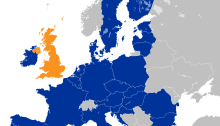
Guest post by Dr Anthony Costello, lecturer in EU Politics and Comparative Government at the Department of Government, University College Cork. The 25th November 2018 marked a turning point in the ongoing Brexit saga. British and EU negotiators finally came to a seemingly acceptable agreement on Brexit after nearly two years of painstaking negotiations.

Guest post by Joseph Lacey, Assistant Professor, University College Dublin. EPA Joseph Lacey, University College Dublin Remainers continue to push for a people’s vote on the UK government’s Brexit deal and, of course, they have a point. How exactly the British people wanted to leave the EU, when they voted to leave it over two…
Internationally Ireland is seen as a beacon in the development of deliberative democracy. There has been plenty of positive hype (not least in international media coverage) about the outcomes of the 2018 abortion and 2015 marriage equality referendums that followed recommendations by the Irish Citizens’ Assembly (or CA, that operated between 2016-18) and Irish Constitutional…
Over on the excellent British blog site Democratic Audit, Jack Bridgewater from the University of Kent cast an eye over the campaign that led to the decision to repeal the 8th amendment last month in this post. His focus is on the process that led up to the referendum and, particularly, the role of the…
The long-anticipated referendum on repealing the 8th amendment, known by proponents and opponents alike at the time of its initial adoption as the ‘pro-life amendment’, has delivered a result widely and understandably described as ‘seismic’, ‘historic’ and ‘momentous’. In a high turnout (64%, second among standalone referendums only to the 1972 vote on EC entry…
Guest post by Professor William J V Neill, Visiting Research Professor at the Institute of Irish Studies, Queen’s University Belfast and Emeritus Professor of Spatial Planning at the University of Aberdeen. In a recent article for the journal Parliamentary Affairs, Professor Peter Shirlow, Blair Chair at Liverpool University, sharply criticises the impoverished language game involved…

This post is based on the author’s paper to PSAI Annual Conference 2017, titled ‘Reliable text-analysis coding of emotive campaign rhetoric in referendums’, due to be presented Sunday 15 October.
Guest post by Joe MacDonagh, lecturer at the School of Business and Humanities, IT Tallaght. This post is based on his paper to PSAI Annual Conference 2017, titled ‘PM Theresa May––appealing to the few and not the many?’, due to be presented Saturday 14 October.

